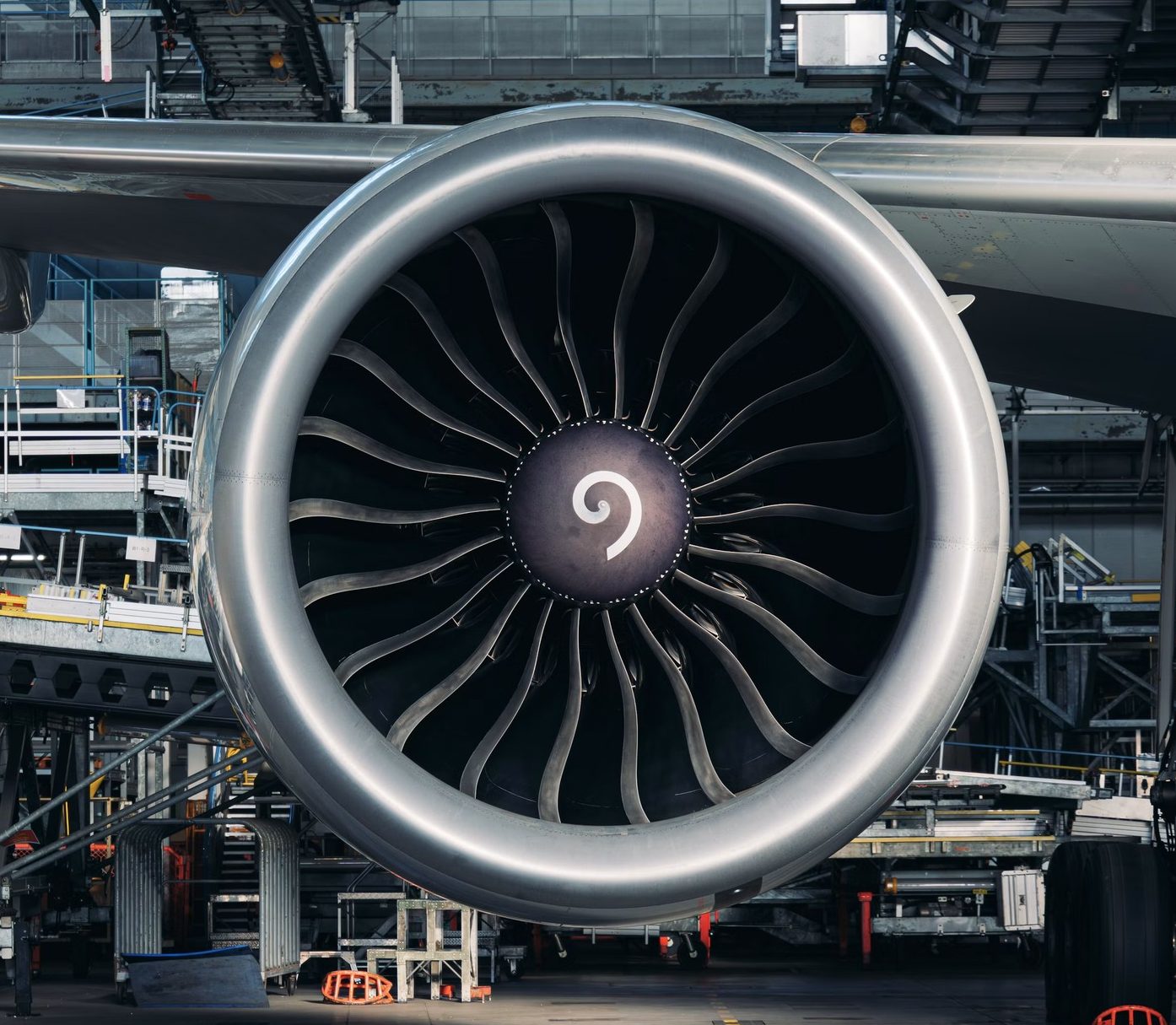
Jet engine of an airliner in a maintenance hangar
OlefinAP2LabFuels & Chemicals
  1. Lab
  2. Pilot
  3. Scale-up
  4. Commercial

Fatty acids to Hydrocarbons

Use
Sustainable Aviation Fuel (SAF), Green Diesel, Marine Diesel, Oleochemicals
Data
Fatty acid decarboxylase

Enzymatic decarboxylation of fatty acids has long been considered the holy grail for green diesel—a direct route from abundant fats to drop-in fuels. Biological options are too fragile and slow for plant conditions, while conventional HEFA refining relies on 350°C heat, high hydrogen pressures, and massive megafactories.

We modelled the active site of decarboxylating peroxygenases and rebuilt it into a compact synthetic catalyst. It converts renewable fatty acids directly into SAF-range hydrocarbons under mild conditions, without requiring hydrogen gas.

Applications

What this unlocks

Direct production of alkanes without requiring secondary hydrocracking steps.

Eliminates the heavy hydrogen gas dependency and high operating costs of legacy HEFA processing, making regional bio-fuel plants profitable at smaller scales, close to the feedstock.

Converts the CO₂ byproduct directly at the reactor outlet, coupling fuel production with a cascade reaction that yields high-value polymer precursors.

Benefits

What this allows

Mild conditions

78°C at atmospheric pressure with zero hydrogen input, cutting energy demand, safety footprint, and plant capital costs.

Pure drop-in hydrocarbons

Produces straight-chain and branched alkanes compatible with existing engines and fuel infrastructure, bypassing the blend and performance limits of first-generation biodiesel.

Broad feedstock tolerance

Works across a range of messy, mixed fatty acid feedstocks.

Do you have feedstocks that are difficult to upgrade?

We are building relationships across the value chain, from feedstock owners through to energy companies.

Get in touch

Developed with the Level Nine platform

Abstract render of translucent blue and green blocks
Powered by artificial intelligence

Powered by artificial intelligence

There are more possible catalyst designs than a laboratory could make in a lifetime. Searching that space by hand is why catalyst development has historically taken years.

Machine learning generates and screens candidates against activity, structure and synthetic route, compressing that work into months. Every design still has to survive the bench, and that is where the answer actually comes from.

A platform, not just one product

A platform, not just one product

One catalyst is a result. A repeatable way of producing them is a different proposition, and it is the difference between a company with a product and a company with a method.

Our routes start from different feedstocks and end at different molecules. The same platform produced both, and each one tests a capability the next can use.

Designed from first principles

Designed from first principles

The usual answer to a fragile enzyme is to improve it. That keeps the protein, and the protein is what makes it fragile in the first place.

We model the small part that does the catalytic work, then rebuild it as a synthetic structure designed for industrial conditions. Not an improved enzyme. A different kind of catalyst.